Sunday, May 10, 2015

The Transistive Property of Love


The texts for this week were Acts 10:44-48, 1 John 5:1-6 and John 15:9-17. Instead of choosing just one of these texts, I read them all and prayed about finding a connection. As I read over them, certain parts of the texts stood out and started weaving together.


From Acts: While Peter was still speaking, the Holy Spirit fell upon all who heard the word. The circumcised believers who had come with Peter were astounded that the gift of the Holy Spirit had been poured out even on the Gentiles…

From I John: Everyone who believes that Jesus is the Christ has been born of God…By this we know that we love the children of God, when we love God and obey his commandments. For the love of God is this, that we obey his commandments.


and from John: If you keep my commandments, you will abide in my love…This is my commandment, that you love one another as I have loved you. No one has greater love than this, to lay down one's life for one's friends.


let us pray.


so first of all, in Acts, when the circumcised believers are all shocked that these unclean Gentiles can receive anything from God, this is so us. all of us. We are so sure we know who God loves and doesn't love. who is deserving of God's gifts.

The reason we are so sure is because we want to be the ones who receive God's gifts. We want to be in right standing with God. That where the next text comes in – believe in Jesus and obey God's commandments. ok, but what are God's commandments? 

So now the Gospel reading – Jesus tells us that His commandment is to love one another. Ok! now we know what the requirements are, we can live right. Where do we start?

All of this reminded me of a certain expert in Jewish law. He too wanted to make sure he was the right sort of person. He wanted to justify himself, to declare himself righteous, to defend his position. He too was surprised by the hero of Jesus story.


The story goes like this:

One day an expert in religious law stood up to test Jesus by asking him this question: “Teacher, what should I do to inherit eternal life?”

Jesus replied, “What does the law of Moses say? How do you read it?”

The man answered, “‘You must love the Lord your God with all your heart, all your soul, all your strength, and all your mind.’ And, ‘Love your neighbor as yourself.’”

 “Right!” Jesus told him. “Do this and you will live!”

The man wanted to justify his actions, so he asked Jesus, “And who is my neighbor?”

Jesus replied with a story: “A Jewish man was traveling from Jerusalem down to Jericho, and he was attacked by bandits. They stripped him of his clothes, beat him up, and left him half dead beside the road. By chance a priest came along. But when he saw the man lying there, he crossed to the other side of the road and passed him by. A Temple assistant (Levite) walked over and looked at him lying there, but he also passed by on the other side. Then a despised Samaritan came along, and when he saw the man, he felt compassion for him. Going over to him, the Samaritan soothed his wounds with olive oil and wine and bandaged them. Then he put the man on his own donkey and took him to an inn, where he took care of him. The next day he handed the innkeeper two silver coins telling him, ‘Take care of this man. If his bill runs higher than this, I’ll pay you the next time I’m here.’

“Now which of these three would you say was a neighbor to the man who was attacked by bandits?” Jesus asked.

The man replied, “The one who showed him mercy.”

Then Jesus said, “Yes, now go and do the same.”


This is a weird answer to the question "who is my neighbor?" It seems convoluted and lengthy. The priest and the Levite are supposed to be the good guys in the story but they are not. Then this enemy, this unclean, despised Samaritan comes on the scene. This is the where the dark music comes in – oooh, the bad guy! what's he gonna do to this poor helpless guy lying in the ditch? he has compassion on him. he binds up his wounds. he takes him to a place where he can receive more care and promises to come back and pay his bills.


Jesus is seriously blowing this law expert's mind. But, if we are careful in our reading of God's word, we will see that God has been telling us all along that He ALWAYS uses the "wrong sort" of person: Adam and Eve blew it, Noah got drunk, Abraham lied about his wife and tried to hurry God's promise, Jacob was a deceiver and trickster, Tamar posed as a prostitute, Rahab was a prostitute, Moses was a murderer, Ehud was left-handed, Deborah was a woman Judge, Gideon was the least of the least, Samson was, well, don't even get me started on Samson!, Ruth was a foreigner, David was an adulterer and a murderer and a warmonger, Jonah disobeyed God, then repented and then got seriously angry over a dead plant.


Jesus stories and actions show us the same thing: healing beggars, celebrating the prodigal son, talking to the woman at the well, going to Zacchaeus' house, hanging out with tax-collectors and prostitutes and now this: the "good" Samaritan.


All my life, I have thought of this story as a message to reach out to others who are not like me or to help those in need regardless of their gender, creed or color. And is it that. God does want us to love our neighbor and this story does cast a wide net over who our neighbor might include. But Jesus is a master story teller, and as I read this story over and over, I started to see some other connections.


First of all, the priest and the Levite are not accidental choices for the ones leaving the guy in the ditch. What is Jesus trying to say about that? The priest is a representative of the Law. The Law was what this expert was banking on to guarantee him eternal life. The Levite was one who carried out the duties in the Temple and in that represents service to God. So, neither the Law nor service to God saved this man from his helpless condition.


Then a certain Samaritan came by. Someone who was "despised and rejected" by the Jews – and Jesus says "when he saw the man, he felt compassion for him" This is almost word for word what the Bible says about Jesus in Matthew 9:36 "When he saw the crowds, he had compassion on them, because they were harassed and helpless" Then he goes over to him. The man can do nothing but lie there half-dead. The Samaritan pours oil and wine over his cuts and bruises. Oil and wine are used frequently in the Old Testament as examples of how God will provide for His people. Joel 2:19 says The LORD will answer and say to His people, "Behold, I am going to send you grain, new wine and oil, And you will be satisfied in full with them." Jesus often uses wine to represent His blood.


He bandaged the wounds and put him on his own beast and brought him to an inn. An inn is not a home. People don't live in an inn forever. It is a temporary place of safety, of rest. There is an inn keeper there who will take care of him. The inn keeper is given what he needs to care for the man and a promise to pay back if he spends more. And lastly, the Samaritan promises to come back.


Could Jesus be talking about Himself?  

Tullian Tchividjian, professor of theology at Reformed Theological Seminary in Orlando, Florida, thinks so: "In a rich irony, we move from being identified with the priest and the Levite who never perfectly love our best friends “as ourselves,” much less our enemies, to being identified with the traveler in desperate need of salvation. Jesus intends the parable itself to leave us beaten and bloodied, lying in a ditch, like the man in the story. We are the breathless bruised. We are the needy, unable to do anything to help ourselves. We are the broken people, beaten up by life, robbed of hope.

But then Jesus comes.

Unlike the Priest and Levite, He doesn’t avoid us. He crosses the street—from heaven to earth—comes into our mess, gets his hands dirty. At great cost to himself on the cross, he heals our wounds, covers our nakedness, and loves us with a no-strings-attached love. He brings us to the Father and promises that his 'help' is not simply a one-time gift—rather, it’s a gift that will forever cover 'the charges' we incur."


This view of the Samaritan as Jesus dates all the way back to the 3rd century. It takes this story from the realm of a moralistic tale to a story of salvation. The original question was “Teacher, what should I do to inherit eternal life?” and it would uncharacteristic of Jesus and contrary to the gospel for Him to give an answer that reinforces human effort as the way to salvation.      In answering the question "who is my neighbor?” Jesus shows us the condition of our souls.


Romans 5 says, "When we were utterly helpless, Christ came at just the right time and died for us sinners. Now, most people would not be willing to die for an upright person, though someone might perhaps be willing to die for a person who is especially good. But God showed his great love for us by sending Christ to die for us while we were still sinners." Jesus said, “Healthy people don’t need a doctor—sick people do. I have come to call not those who think they are righteous, but those who know they are sinners.”


Now it's Jesus turn for questions: " Now which of these three would you say was a neighbor to the man who was attacked by bandits?” The expert in the law can't even bring himself to say the word Samaritan. He answers: “The one who showed him mercy.”


Then Jesus says, "go and do likewise" Show mercy. He is asking us to be his hands and feet here on earth. To find those lying in ditches and bring them hope and healing in His name. But we have to remember that we were once in that ditch ourselves. We were dead in our sins and transgressions, and we have been made alive in Christ. Only when we see our own need for God’s grace and mercy can we reach out to others from a place of mutuality and compassion instead of advantage or privilege.


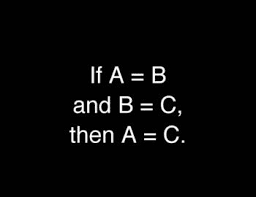
But we find ourselves like the expert in the law and the circumcised believers trying to figure out if we are doing it right.    Jesus says "If you keep my commandments, you will abide in my love…This is my commandment, that you love one another as I have loved you." So there's not a formula per se, but if there were, it would look something like this:

Loving God = Obeying God

Obeying God = Loving one another

In mathematics, there is something called the transitive property of equality which states that if a=b and b=c, then a=c. Using this property, we can conclude that:

Loving God = Loving one another

We can show God how much we love Him by loving those around us. And we can also see how much of God's love we have by noticing how much we love those around us. Frederick Buechner describes this kind of love: "Loving each other doesn't mean loving each other in some sentimental, unrealistic, greeting-card kind of way but the way families love each other even though they may fight tooth and nail and get fed up to the teeth with each other and drive each other crazy, yet all the time know deep down in their hearts that they belong to each other and need each other and can't imagine what life would be without each other--even the ones they often wish had never been born."

Jesus saw our need, had compassion, crossed the road, bandaged our wounds and brought us to safety – go and do likewise.

Sunday, March 15, 2015

Opportunities for Joy


Our text today comes from John 15: 7 "If you live in Me [abide vitally united to Me] and My words remain in you and continue to live in your hearts, ask whatever you want, and it shall be done for you."

let us pray

O King of Heaven, hear our prayer today and grant us hearts full of wisdom that are committed to You. Help us to do justly, love mercy, and walk humbly with You this day. Amen.

I have been thinking about this passage a lot. Mostly because it doesn't seem to work. We ask for things – the healing of a friend, restoration of relationships, safety, peace – and they don't come about. Sometimes people say that our faith is weak and that is why we don't get what we want. That we are not asking in accordance with God's will. That our prayers are blocked by our own sin. That God has given us the answer of No. I think there is more to it than that.

Instead of thinking about God, who is unseen, let us consider someone who is seen. A powerful person. Think of President Obama, perhaps, or Bill Gates. If one of these men were to call you up and say "ask whatever you want, and it shall be done for you."  That is a far-fetched scenario! Why would either of these people offer this to you?

Why, indeed.

What would motivate either of them to call you? They owe you a favor? You are related to one of them? You are a close personal friend?
I recently read a book called "Lottery" by Patricia Wood about a young man with a low IQ who wins $13 million in the lottery. Suddenly, his family members, who had previously mistreated and ignored him, were constantly calling and asking him for money. How can you know who your friends are when you are rich and powerful?  Perry, the lottery winner, desired to be generous, but he had to navigate requests from many many directions.

This offer has been given before in the Bible.  In 2 Chronicles Chapter 1, we read: "God appeared to Solomon and said to him, “Ask for whatever you want me to give you.”" Same offer.  Solomon responds "Give me wisdom and knowledge, that I may lead this people, for who is able to govern this great people of yours?" And God responds with “Since this is your heart’s desire and you have not asked for wealth, possessions or honor, nor for the death of your enemies, and since you have not asked for a long life but for wisdom and knowledge to govern my people over whom I have made you king, therefore wisdom and knowledge will be given you. And I will also give you wealth, possessions and honor, such as no king who was before you ever had and none after you will have.” Sound familiar? Sounds a lot like Matthew 6:33 to me: "But seek first his kingdom and his righteousness, and all these things will be given to you as well."

In order to see why God was pleased with Solomon's request, it is noteworthy to see the types of things that God was glad Solomon didn't ask for: wealth, possessions, honor, the death of his enemies, and long life. God is delighted to grant Solomon's request because his request not only benefitted himself but also brought honor and glory to the Giver.

We also see this offer in Esther 5: On the third day Esther put on her royal robes and stood in the inner court of the palace, in front of the king’s hall. The king was sitting on his royal throne in the hall, facing the entrance. When he saw Queen Esther standing in the court, he was pleased with her and held out to her the gold scepter that was in his hand. So Esther approached and touched the tip of the scepter. Then the king asked, “What is it, Queen Esther? What is your request? Even up to half the kingdom, it will be given you.” It was no small thing to approach the throne of the king uninvited. As far as she knew, there was only one rule and that was if you go to the king without being summoned he will either extend his scepter to you or kill you. He had already gotten rid of one queen, what was to say he would have favor on her? She was terrified to do this and had all the Jews fast for three days and nights to garner up the courage to approach him. Esther asks to throw him a party – smart thinking! She asks him for something that will benefit him.

Let's look at one more instance where we see this offer given in the Bible. This time, we are in Mark 6: "Herod gave a party for his high government officials, army officers, and the leading citizens of Galilee. Then his daughter came in and performed a dance that greatly pleased Herod and his guests. “Ask me for anything you like,” the king said to the girl, “and I will give it to you.” He even vowed, “I will give you whatever you ask, up to half my kingdom!”"  In this case, the girl consults with her mother and asks for the head of John the Baptist. "Then the king deeply regretted what he had said; but because of the vows he had made in front of his guests, he couldn’t refuse her. So he immediately sent an executioner to the prison to cut off John’s head and bring it to him. The soldier beheaded John in the prison, brought his head on a tray, and gave it to the girl, who took it to her mother." What she requested did not bring honor or glory to Herod. He deeply regretted his offer.

I was talking over this passage with Asa while preparing for this sermon and I asked him, "Who gets to say that: ask whatever you want and I will give it to you?" and he said "me!" and I said, "oh really, and what do you back that up with?" and he said, "disappointment." But our hope is in a God who is faithful to His Word. and this hope does not disappoint.
and yet. we find ourselves disappointed.

Disappointment is, according to the dictionary, "the feeling of sadness or displeasure caused by the nonfulfillment of one's hopes or expectations." I have found in my life, in my marriage, in my friendships, in my community, that simply changing my expectations can keep disappointment at bay. When situations don't fit my expectations, I still have to trust that God is with me. 2 Corinthians 10 says "We demolish arguments and every pretension that sets itself up against the knowledge of God, and we take captive every thought to make it obedient to Christ."

If I want to keep from being disappointed by God, I need to keep my expectations in line with His promises.  In I John 3, we have this encouragement: "Dear friends, we are already God’s children, but he has not yet shown us what we will be like when Christ appears. But we do know that we will be like him, for we will see him as he really is.   And all who have this eager expectation will keep themselves pure, just as he is pure." In Romans 5 it says "…this hope will not lead to disappointment. For we know how dearly God loves us, because he has given us the Holy Spirit to fill our hearts with his love."

Last fall, after a spate of bad news: sick relatives, sick friends, friends moving away, I met with my spiritual director. I was trying to hear from God, but felt like there was only silence. In my frustration I said to God, "Why can't I hear from You?" and I felt like He was saying, "because you have already decided what you want me to say." So I tried to give up my expectations. And listen. The next thing I knew, I felt like I was walking down a beach with Jesus. It was super peaceful and comforting. I looked at Him. He was beaten and bloody and pieced together – like something from a horror film- Jesus from the cross. He said to me, "what do you want?" In that moment, I realized that I already had everything I want or need. His sacrifice is all I really truly need. How could I possibly ask this suffering man for anything else?

When I told my spiritual director about this, she asked me about my children, "What do you want for them?"  I answered, "really all I want for them is to know God. and to somehow see the circumstances of their lives as ways that He is trying to get through to them, opportunities for joy." She went on to ask me, "what would you do if they asked you for something?" "I would give it to them if I could. if I thought it would be good for them."

She then reminded me, "Jesus is asking you what you want. He wants to know. What do you want?" so I said "really all I want is to know God. and to somehow see the circumstances of my life as ways that He is trying to get through to me, opportunities for joy."

Who gets to say that: "ask whatever you want and I will give it to you?" Only a king. We serve a King. That word has almost no meaning to us anymore: burger king, prom king, king of the road, king crab, king-size, "king me", taco and burrito king, king of pop. The dictionary definition is "sovereign or monarch who holds by life tenure, and usually by hereditary right, the chief authority over a country and people." When we decide to follow Jesus, we join an absolute monarchy. The triune God is the only person in charge and we surrender our rights to Him.

We should tremble to enter His court. But Jesus is so gracious!  In Hebrews 4, we read "we have a great High Priest who has entered heaven, Jesus the Son of God.  This High Priest of ours understands our weaknesses, for he was tempted in every way that we are, yet he did not sin. So let us come boldly to the throne of our gracious God. There we will receive his mercy, and we will find grace to help us when we need it most." and in Romans 8 "God did not keep back his own Son, but he gave him for us. If God did this, won’t he freely give us everything else?" Psalm 100 shows us how to enter His court: "Acknowledge that the Lord is God! He made us, and we are his. Enter his gates with thanksgiving; go into his courts with praise."

In the book of James, we find this path to fulfilment: "when troubles of any kind come your way, consider it an opportunity for great joy. For you know that when your faith is tested, your endurance has a chance to grow.  So let it grow, for when your endurance is fully developed, you will be perfect and complete, needing nothing. If you need wisdom, ask our generous God, and he will give it to you."

Perry, the lottery winner with the low IQ, adopts a philosophy in his generosity:  “Everyone should get what they want.” And he learns that no matter how much he gives to his grabby, inconsiderate relatives, they will never have what they want. And he also learns that because he is surrounded by and motivated by love, he has always had everything he has ever wanted, even without the winnings.

so what do we really want? not wealth. not honor. not possessions. not the death of an enemy. not long life. Really, all we want is to know God. and to have the wisdom to see the circumstances of our lives as ways that He is trying to get through to us, opportunities for joy.

let us pray.

benediction: Let us come boldly to the throne of our gracious God. There we will receive his mercy, and we will find grace to help us when we need it most.


Sunday, October 19, 2014

Spiritual Buoyancy, or What is Your Density?


The title of my sermon is Spiritual Buoyancy, or What is Your Density? before I get started, let's pray together

God, thank you for making us in Your image and for creating us to not just know You but to have Your Spirit live in and through us. Help us to throw off everything that hinders and the sin that so easily entangles and make room in our hearts for You.

In the 3rd  chapter of Toward God by Michael Casey, there is an illustration that caught my eye. "A rubber ball under water submits.  Once released, it springs to the surface; and the deeper it is held, the more it strains to rise.  The human spirit possesses natural buoyancy.  It can be held down by enslavement to the senses, by acquisitiveness and ambition, by anger and violence, or by what the New Testament calls “cares.”  It can be held down, but its natural tendency remains dramatically oriented toward God.  It can never be satisfied until this upward impulse is allowed freedom." Daniel Rossi made a video to illustrate this point: show video http://youtu.be/11a6VQe1Yms

This illustration made me think about buoyancy. The ball floats because it is less dense than the water. If we took that same ball and deflated it, it most likely would sink or, at the very least, it would not float as well or for as long. If we deflated it by puncturing it, it would not be long before all of the air was gone and it began to take on water and then as it filled with water, it would be pulled deeper and deeper below the surface. To explore density a little more, let's look at these bowling balls:

Every bowling ball is the same size, but not every bowling ball has the same mass. So the heavier the bowling ball, the denser it is. A ball that is 12 lbs. will just be suspended in the water not really floating or sinking – heavier than that, it will sink; lighter than that it will float. To take the illustration even farther, it is the space, or air, inside the ball that forces it up towards the air above the water. show YouTube clip https://www.youtube.com/watch?v=FeKb_xfr608 from 2:22 til 2:47 without sound

I think we are often satisfied to live like the 12 lb. bowling ball. Not sinking, but not really floating. Under the surface of the water, the voices above the water are dulled or inaudible, and the pull on us is not making us feel burdened or weighed down. It feels safe. But as Casey says, the things that are holding us down are our own lusts, our drive for power and recognition, anger and resentment – the cares and worries of this world.  The things that we think we need and want and our own agenda are weighing us down and keeping us from fellowship with God and one another.

Casey talks about the things that we naturally long for – validation, intimacy, wholeness, safety, adventure – as things that can only be met fully in God, but we often find cheap substitutes.

Pascal described it this way: “What else does this craving, and this helplessness, proclaim but that there was once in man a true happiness, of which all that now remains is the empty print and trace? This he tries in vain to fill with everything around him …"

balloon illustration

Covetous or lustful fantasies, talking about others, judgmental thoughts, escaping into the world of the internet or television, isolating, worrying what others think, sarcasm - habits that are "not that bad" "could be worse" "not hurting anyone" at the very least, keep our spiritual senses dulled and at the very worse pave the way for serious departures into destructive behaviors– a slippery slope that leads us ever so slowly to places we never intended to go. Genesis 4:7 "You will be accepted if you do what is right. But if you refuse to do what is right, then watch out! Sin is crouching at the door, eager to control you. But you must subdue it and be its master.”

There is no neutral ground. All we have to offer God is our choice.  And each moment offers us small choices – to love or not love our neighbor, to forgive or not forgive, to bless or curse our enemy, to surrender to God or to fight against Him, to judge or judge not, to be patient & kind or to envy & keep records of wrongs. so on and so on – choices to move towards God or away from Him.

as C.S. Lewis puts it “…the real problem of the Christian life comes where people do not usually look for it. It comes the very moment you wake up each morning. All your wishes and hopes for the day rush at you like wild animals. And the first job each morning consists simply in shoving them all back; in listening to that other voice, taking that other point of view, letting that other, larger, stronger life come flowing in. And so on, all day. We can only do it for moments at first. But from those moments a new sort of life will be spreading through our system because we are now letting him work at the right part of us."

Prayer is the way to let that other life come flowing in. We ask God to show us what is getting in the way of our relationship with Him and we ask Him to fill us anew with His Holy Spirit.

Luke 9:23-24  Then he said to them all: “Whoever wants to be my disciple must deny themselves and take up their cross daily and follow me. For whoever wants to save their life will lose it, but whoever loses their life for me will save it."

Prayer is really just as simple as talking and listening to God, and the more we do it, the more buoyant our spirit becomes. How can we stay in touch with God?

lakehouse story

what objects did Jesus use to compare Himself, the kingdom, man, etc. shout em out. sheep, coins, grass, lilies, city on a hill, a wayward son, treasure, fig, mustard and fruit trees, vine, seeds, farmer, fisherman, nets, wheat, weather, wind, yeast, bread, water, wine, lamps, children, doctor, bride, judge, workers, door, salt, neighbor, widow, tax collector, building houses, money, banquet, unlikely hero of the story, rocks, pearl

do you ever see a tree? or bread? or the wind? salt?, a house being built on a foundation? God wants us to find Him – Jeremiah 29:13-14 You will seek me and find me when you seek me with all your heart. I will be found by you,” declares the Lord, and as we seek first His kingdom and His righteousness, He will give us everything we need.

Ask God to help you stay in touch with Him throughout your day and you will be amazed at the way He breaks into your reality over and over. Then you will say with Jacob: “Surely the LORD is in this place, and I wasn’t even aware of it!” Genesis 28:16

C.S. Lewis Every time you make a choice you are turning the central part of you, the part of you that chooses, into something a little different from what it was before. And taking your life as a whole, with all your innumerable choices, all your life long you are slowly turning this central thing either into a heavenly creature or into a hellish creature: either into a creature that is in harmony with God, and with other creatures, and with itself, or else into one that is in a state of war and hatred with God, and with its fellow-creatures, and with itself. 

Once we have said yes to God, the relationship is started and our true life is hidden with God in Christ. Prayer is the way we tap into that life. As Casey says “Prayer is an attempt to realize the love that unites us with God, allow it to become more present to us, and give it greater scope to act upon us and change us. We do not produce prayer. We allow prayer to act.”

Casey goes on to say that sometimes events or temptations; pain of our own making or pain inflicted on us act as a wake-up call. Like the ball plunged underwater, our impulse is to spring towards God gasping for breath. as C.S. Lewis says “…pain insists upon being attended to. God whispers to us in our pleasures, speaks in our conscience, but shouts in our pains: it is his megaphone to rouse a deaf world.” Casey calls these moments “triggers of prayer” – we see this over and over again in the story of Israel as they cry out to God in times of oppression and distress.

God wants to be in a constant conversation with you and He will try to get (and keep) your attention in whatever ways He can. Look for Him –God is our refuge and strength, a help in distresses, very readily found.
When Jesus disciples asked Him how to pray He gave them what we now call “the Lord’s Prayer” this prayer is so beautiful and profound, but I am afraid that its significance can be drowned out by familiarity. So to close today, in the rev rag is the Lord’s Prayer with a space for you to write it out in your own words. As you do this, think about what Jesus trying to say about how to pray? When the disciples heard it from Jesus it was new to them. How can you hear it in a new way today?

Friday, August 1, 2014

blog at JPUSA


I had a blog post at the official JPUSA blog check it out!

Sunday, March 23, 2014

Who's Writing the Story?


The 11th and 12th grade students and I have been storying through the Bible together this year. The curriculum, called Echo the Story, written by Michael Novelli, is taking us through the major stories of the Bible. The catch is that we are supposed to try to hear the stories as if we had never heard them before. As we read more and more of them we can reference back to ones that we have read and try to find the connections between them.

One of the techniques that is suggested for hearing the story in a new way is to imagine it as a movie. If I were watching this as a movie, what would I notice? Who are the characters? What would stand out? What story is the director trying to tell us?

As I approached this text, I tried to hear it for the first time. The movie that I saw, and this sermon, could be titled "Who's writing the story?"


Let's pray: Father God, thank you for giving us life. Jesus, thank you for showing us the way to live. Holy Spirit come and lead us into Your truth. 


We can see from the stories about Peter that he is a man of action. He is quick to give his opinion and to say what the others maybe are thinking but are too timid to say. He is daring. He challenges Jesus on several occasions – "if you say so." "If it's really you…"" that won't happen to You." he's a tough guy. He almost seems like Jesus' bodyguard. 


So here we are at the Passover. This is a religious observance the scope of which the western world can't imagine. The entire city of Jerusalem is observing these holy days. People have come from all over the region to participate. Hundreds of thousands of people. Jesus has ridden through the town with crowds of people shouting and cheering for Him. Jesus has gone into the temple and thrown the tables around. Peter is right there with him. This is IT! Bring it! 


They gather together for their marching orders. Peter is ready to hear how he can be a part of the revolution! But Jesus is taking off His clothes and dressing like a slave. He is starting to wash the feet of the others. Peter says "not me! Don't wash my feet!" Jesus responds by saying, "you can't be a part of My inner circle unless I wash your feet." "in that case, says Peter, wash my head and hands too! – count me IN!"


Jesus then tells them some more of what is about to happen. This is the big moment. The pep-talk.  The rousing battle cry. Peter is waiting for the plan. What Jesus is saying doesn't quite compute. Talk about death and suffering. This again? Come on Jesus, get to the good stuff. Then Jesus starts to talk about being betrayed and having to leave. This gets Peter's attention "where are you going?!" Jesus says, "you can't come with Me now. you'll have to wait." Peter is anxious to act "why can't I come now?! I am ready to die for you!" Jesus answered, “Die for me? I tell you the truth, Peter—before the rooster crows tomorrow morning, you will deny three times that you even know me.


in another account of this same story, Jesus quotes an old testament scripture and tells the disciples that it will be fulfilled by them. Jesus told them, “Tonight all of you will desert me. For the Scriptures say, ‘God will strike the Shepherd, and the sheep of the flock will be scattered.’ …Peter speaks up again, “Even if everyone else deserts you, I will never desert you.” Jesus replied, “I tell you the truth, Peter—this very night, before the rooster crows, you will deny three times that you even know me.”


They all take a half mile walk together outside the city to a more rustic location. A mountainside with a garden. Jesus seems stressed out. He asks His friends to wait and pray with Him. Not exactly the type of orders Peter is looking for. So he falls asleep. He awakes to the sound of a crowd. People are coming for Jesus. suddenly Peter leaps up, draws a sword and attacks! He cuts off someone's ear! I did not see that coming! where did he get a sword? why this sudden violence? Jesus puts the guy's ear back on and asks Peter to back off. "Am I not supposed to do God's will?! put your sword away!"


They arrest Jesus. Take Him away. Peter is not daunted. He is not going to fall away. He is going to go where Jesus is going. "I'll show You how wrong You are, Jesus!" He goes in and sits with the guards and waits to see how it would all end. He's in the courtyard. Someone recognizes him. "hey you are one of that man's followers, right?" Peter wants to stay close to Jesus. He is formulating a plan. "no, not me." Can't blow his cover. Now Peter is warming himself by the fire. What to do next? How can I get Jesus out of here? "you are with that guy, aren't you?" Peter stills denies it. In one account it says that an hour passes before they notice his accent and say, "you are not from around here, you must be with that prisoner" now Peter gets mad and starts yelling and swearing that he doesn't know Him. Right then the rooster crows. In Luke's gospel it says "At that moment Jesus turns and looks at Peter. Suddenly, the words flash through Peter’s mind: “Before the rooster crows tomorrow morning, you will deny three times that you even know me.” And Peter leaves the courtyard, weeping bitterly.


two things hit me when I read this story:

what if Jesus hadn't predicted the denials?

and

why is Peter crying?


If Jesus hadn't predicted Peter's denials, would he have even acknowledged them? or noticed? he seems clearly preoccupied. He has a sword which he has already used once, and he has made some bold statements. He has an agenda – his own version of the story that he is trying to bring about. When we abandon Jesus story for our own, all bets are off. "What's the big deal? If I say I am with Jesus I blow my cover and then what help will I be to Him?" He doesn't seem at all bothered by saying it. Oh, the things we justify when we think we know better than Jesus.


So now this tough guy is crying bitterly. why? Because he feels bad that he said he didn't know Jesus? That's part of it for sure. But there's a bigger story going on here. Jesus looks at him and His words come back to Peter. Who does that? Who tells you specifically what you are going to do within a certain time frame? If someone said to me "before dinner tonight, you will have 3 conversations about Abraham Lincoln" and I say "you're crazy, I never talk about Abraham Lincoln" and go about my day. When dinnertime rolls around if that had happened despite my best efforts to keep it from happening, I would freak out! "How did you know that?!!" "Did you make that happen?!"


I think that when the rooster crowed, something extraordinary happened to Peter. I think in that moment he realized that Jesus was God! A personal prophecy fulfilled on his behalf. To show Peter that He was in charge. To show Peter His power.  To show Peter that His Words are True.


In that moment, Peter knew there would be no rescue. Peter knew that Jesus had to die. He finally pieced it together. This to me seems like something a tough guy like Peter would weep about. Not being able to save Jesus. Sitting idly by as His Friend, His Master, His Commanding Officer is taken away to be killed.


Peter finally gets it. His aha moment comes as the rooster crows. He surrenders.


It's not his story to write. It's God who is writing the story. And He still is. The script is right here for us. The more difficult parts played by the most ordinary folks. 


Jesus has told us what is going to happen and how to respond. There will be trouble. Take heart. Turn the other cheek. Remain in Me. Love your enemies. Leave it all behind for my sake. Forgive. Don't worry about your life. Carry your cross.

But we, like Peter, say to Him, "Heaven forbid! that's not the way the story is supposed to go. You are supposed to take on the bad guys, save us from this oppression, and lead the rebellion." "That's more like Satan's way of doing things", Jesus reminds us. "I have to be obedient to My Father. You would be better off doing the same."


not my will, but Yours.  not my way, but Yours.  not my plan, but Yours. not my story, but Yours.


Before I wrap up, I want to show you a clip from a movie. I am sorry if you have not seen it before because it is truly outstanding. The name of the film is "Stranger than Fiction" and it is about a man named Harold Crick who is hearing voices. Not voices, a voice. A narrator, in fact, who is narrating his every move. He is being driven quite mad by this and seeks the help of a literature professor.  Eventually, this professor recognizes the voice in Harold's head as a famous writer who always kills off her main character. Harold meets his author and she gives him the finished novel. He reads it and gives it to his professor friend to read.

This is the scene after the professor finishes the book: Stranger than fiction - You have to die - YouTube


I won't tell you what Harold chooses. because it's a great film and you should go watch it if you haven't seen it. But I will tell you that we all have this same choice. So go ahead if you want to: play it safe, find a way out of difficult situations, avoid being a part of the larger story. But even if you choose to hide from your Author now, His story will prevail. What God says will happen is TRUTH. As the professor says, "even if you avoid this death, another will find you. And I guarantee that it won't be nearly as meaningful as what the Author has written. The hero dies, and the story goes on forever."

I will leave you with this quote from Frederick Buechner:

"…the life you clutch, hoard, guard, and play safe with is in the end a life worth little to anybody, including yourself; and only a life given away for love’s sake is a life worth living. To bring this point home, God shows us a Man who gave His life away to the extent of dying a national disgrace without a penny in the bank or a friend to His name. In terms of men’s wisdom, He was a perfect fool, and anybody who thinks he can follow Him without making something like the same kind of fool of himself is laboring not under a cross, but a delusion."

Let us pray:

God You say in Your Word that the one who loses his life for Your sake will find it. Help us to find our true life in You. Help us to surrender to You and let You write Your story Your way. Your will be done, on earth as it is in heaven.  In the name of Your Son Jesus, our Example and our Friend. Amen


BENEDICTION:

Since we are surrounded by such a great cloud of witnesses, let us throw off everything that hinders and the sin that so easily entangles. And let us run with perseverance the race marked out for us, fixing our eyes on Jesus, the Author and Finisher of our faith.